In the UK, compensation for a non-fault injury is not based on what you have actually lost. You only get paid for the losses which can be proved with evidence. This is where personal injury claim financial evidence comes handy. It provides concrete proof of what you have spent or lost after the injury, ensuring you receive a payout that reflects an amount you are rightfully owed.
In this blog, we will talk about all the documents you need to prove your financial losses or expenses and how to record them. Give it a read to ensure you get fully compensated.
What Financial Evidence Is Needed For An Injury Claim?
Every document that proves you have spent or lost money because of an injury counts as financial evidence. Courts and insurers require solid proof for every loss or expense incurred. Missing any form of personal injury claim financial evidence can mean thousands lost in compensation. Here are some broad categories into which financial evidence needed for an injury claim can be divided:
Lost Income
Evidence for lost income is based on the nature of your employment. If you are a full time or a part time employee at a company, you will need to submit:
- Your wage slips that show your monthly income.
- A letter from your employer that confirms your shift hours, per hour rate and missed work.
Whereas if you are self-employed or a business owner, you will have to submit:
- Your tax returns from previous years.
- Cancelled contracts or invoices for the work you were not able to complete after the accident.
- Your accountant’s reports explaining lost business income.
- Compensation receipts and invoices for goods or services delivered before the accident.
Medical Expenses
Proof of medical expenses includes every penny you spent on your diagnosis, treatment and recovery after an accident. You will have to submit invoices or receipts for:
- Your prescriptions from the doctor.
- Medical reports from independent experts.
- Cost of treatment or surgeries needed.
- Medical imaging tests such as X-rays, MRI and CT scans.
- Medical equipment purchased, like spinal brace, wrist splints, knee brace, hearing or vision aid.
Travel Costs
You might have to make multiple trips to hospitals or private clinics. Such as, an eye specialist to claim compensation for eye injury. Every single trip you make can be used as evidence for travelling costs. You will have to submit:
- Receipts of taxi fares for hospital visits.
- Bus, train or tube tickets to the clinic.
- Car park receipts and mileage log for every appointment if you travelled in your own motor vehicle.
Property Damage
An accident can damage your belongings as well. You will have to submit the following documents to claim repairs or cost of replacement for your damaged property:
- Proof of ownership of the property.
- Purchase receipts or bank transactions that show the original cost.
- Invoices or quotations for the repairs needed.
Legal Costs
Most solicitors like the panel solicitors at RU1NJURED work on a no win no fee basis. Still, you must keep a record of legal expenses for injury claims that can be claimed from the defendant. This includes:
- Your solicitor’s hourly rate other than the success fee.
- Consultation fee if paid to a legal expert for advice.
- Cost of After the Event (ATE) insurance premium.
- Court fees if your case goes to trial.
- Expert witness fee if utilised to strengthen your personal injury evidence.
- Cost of medico-legal expert reports.
Home Care Assistance
Your injury can limit your movement. You might need help of another person for some physical tasks. Similarly, you might require home modifications for daily living. Here is what you will have to submit in such a scenario:
- Receipts for modifications made. Such as, grab rails installed on walls, raised toilet seat or a walk-in shower.
- Labour invoice and cost of material used for installing modifications.
- Proof of wages paid to a personal helper for cleaning or cooking.
How To Record Your Losses or Expenses?
You can record your losses or expenses by doing both, physical and digital filing. Physical filing involves written notes and hard copies. Whereas digital filing involves pictures, folders and spreadsheets. Here are some easy ways in which you can record your expenses for injury claim purposes:
Maintain An Expense Diary
Keep a separate diary or notebook for all your injury-related expenses. Note down every expense in it with date and time.
Create A Spreadsheet
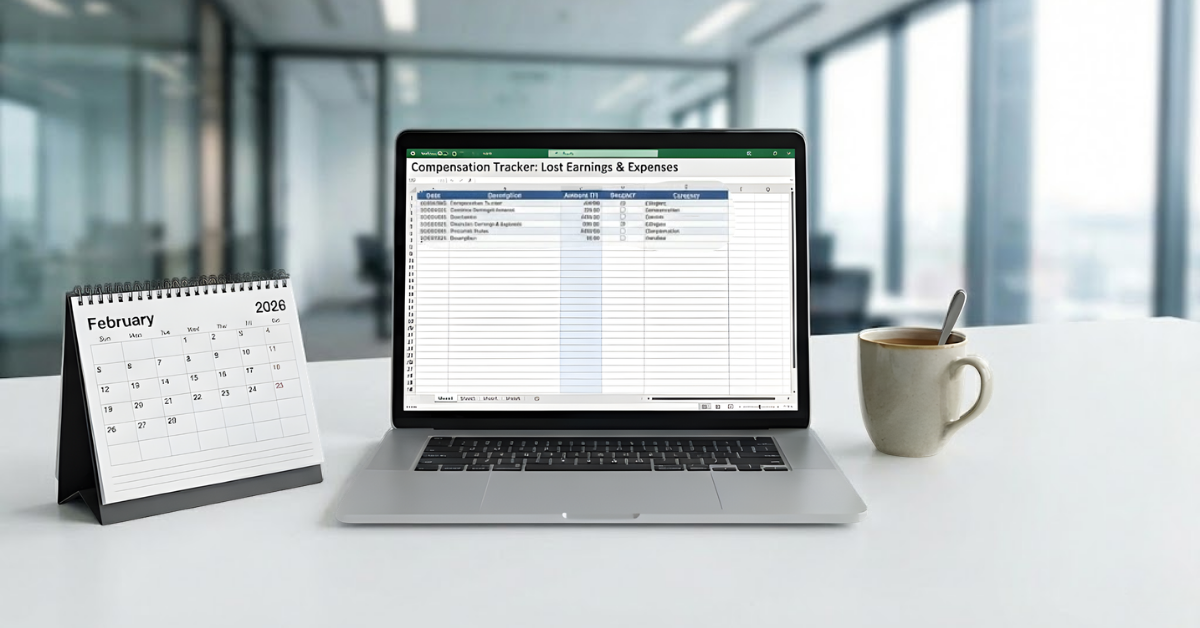
You can create a spreadsheet on Excel or Google Sheets to record your losses and expenses. Be sure to maintain separate sheets or tabs for each loss or expense category.
Create Separate Folders
Store the receipts and invoices or proof of losses in separate folders. It can be a physical file with original documents or a digital folder with images or PDFs.
Take Screenshots of Transactions
Take a screenshot of payment transactions made online. It will help you prove an expense for which you do not have a receipt.
Keep Copies of Your Contracts
It can be your employment or business contract or a contract with a homecare agency. Similarly, it can be an agreement with a solicitor to prove legal expenses for injury claims. Keep their copies with you.
Final Thoughts
Your losses are real. Make sure you prove them. Start tracking your expenses and losses today. Every receipt, invoice or proof of loss is important. Keep a detailed record. Store everything safely. Organise it properly. The amount of compensation you receive depends on your personal injury claim financial evidence. Get help from a legal expert if needed. Personal injury solicitors like the panel solicitors at RU1NJURED know exactly what insurers need.
FAQs
1) What happens if I exaggerate my expenses or losses?
Your claim will be denied for being dishonest. You will not be able to claim any loss or expense even if it was kept real.
2) Can I claim if I don’t have compensation receipts and invoices?
Yes, you can provide other acceptable evidence. This includes a copy of your contract, invoice or bank statement.
3) Can incomplete financial evidence cause a delay in settlement?
Yes, incomplete financial evidence can slow down the negotiations between your solicitor and the defendant’s insurers. Hence, it can cause a delay in personal injury claim time frame for settlement.
4) Can I claim expenses for pre-existing conditions after an accident?
You can only claim expenses for a pre-existing medical condition if it got worse after an accident.